
Unified engineering and security incident response.
One process engine, engineering and security on one timeline, in the chat tools you already use.
Early access
Open Resolvo
Incident response software from BlueDefense
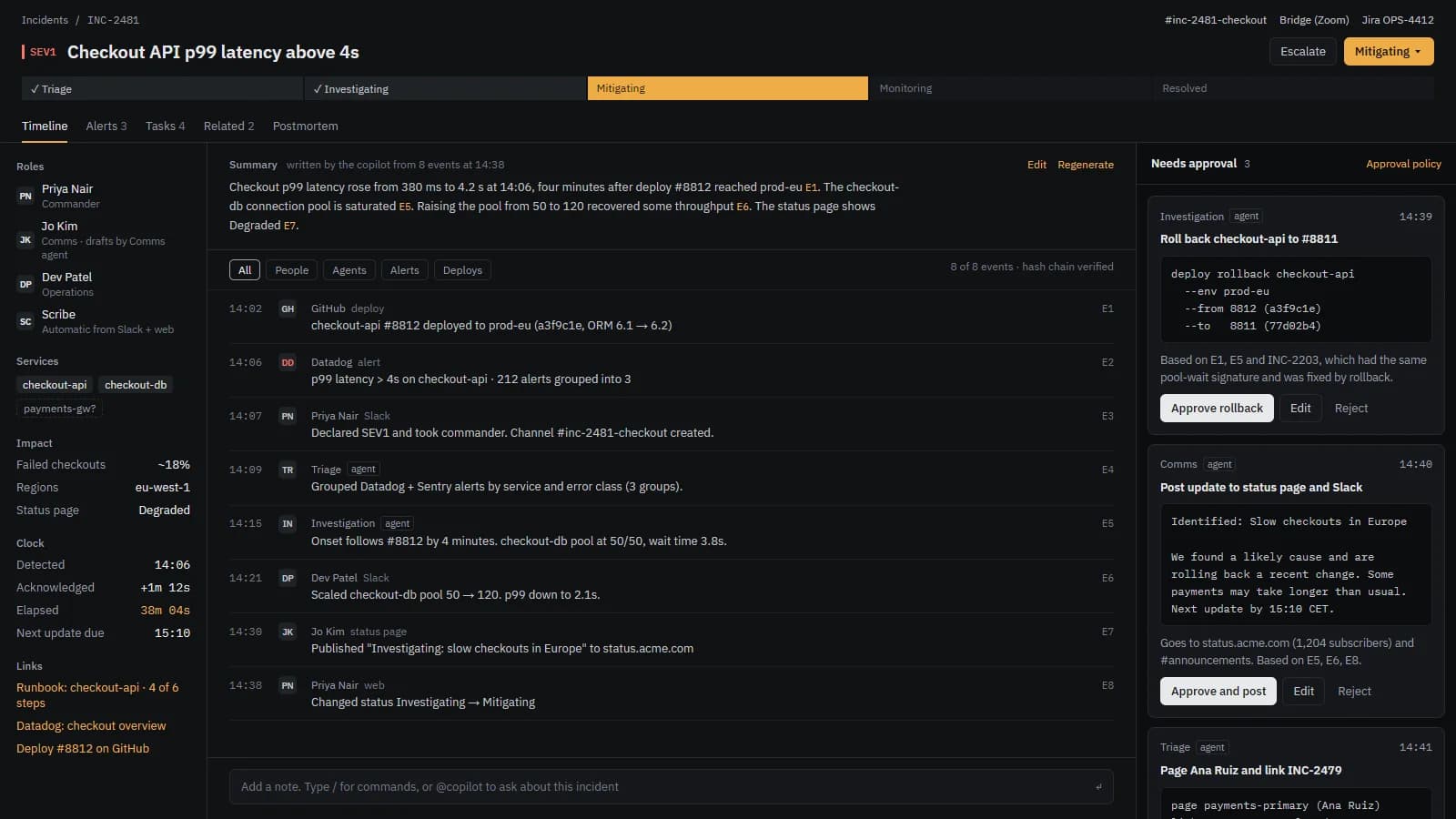
From the first alert to the signed-off postmortem, Resolvo runs the process your team defined, in the chat tools you already use.
Until the demo link is ready, the walkthrough button opens an email to contact@bluedefense.de.
Why now
German and EU rules expect a documented, repeatable response with deadlines attached. These are the deadlines that apply, each with the source next to it.
The problem
The same kind of outage is handled differently depending on who is on call. The steps, the roles and the order change with the person.
The alert is in one tool, the discussion in chat, the decision in a document and the evidence in a ticket. Nobody has the whole picture.
Postmortems start late, action items lose their owner and the same cause returns months later.
How it works
Monitoring alerts are routed, de-duplicated and filtered. An alert can open an incident or page on-call.
Declare in Slack, Teams or the web. The room opens, the right people are added and the summary card starts.
Stages, gates, checklists and roles run the way your team defined them. Updates go out on a cadence set by severity.
The postmortem is pre-filled from the timeline, reviewed and signed off. Action items keep their owners.
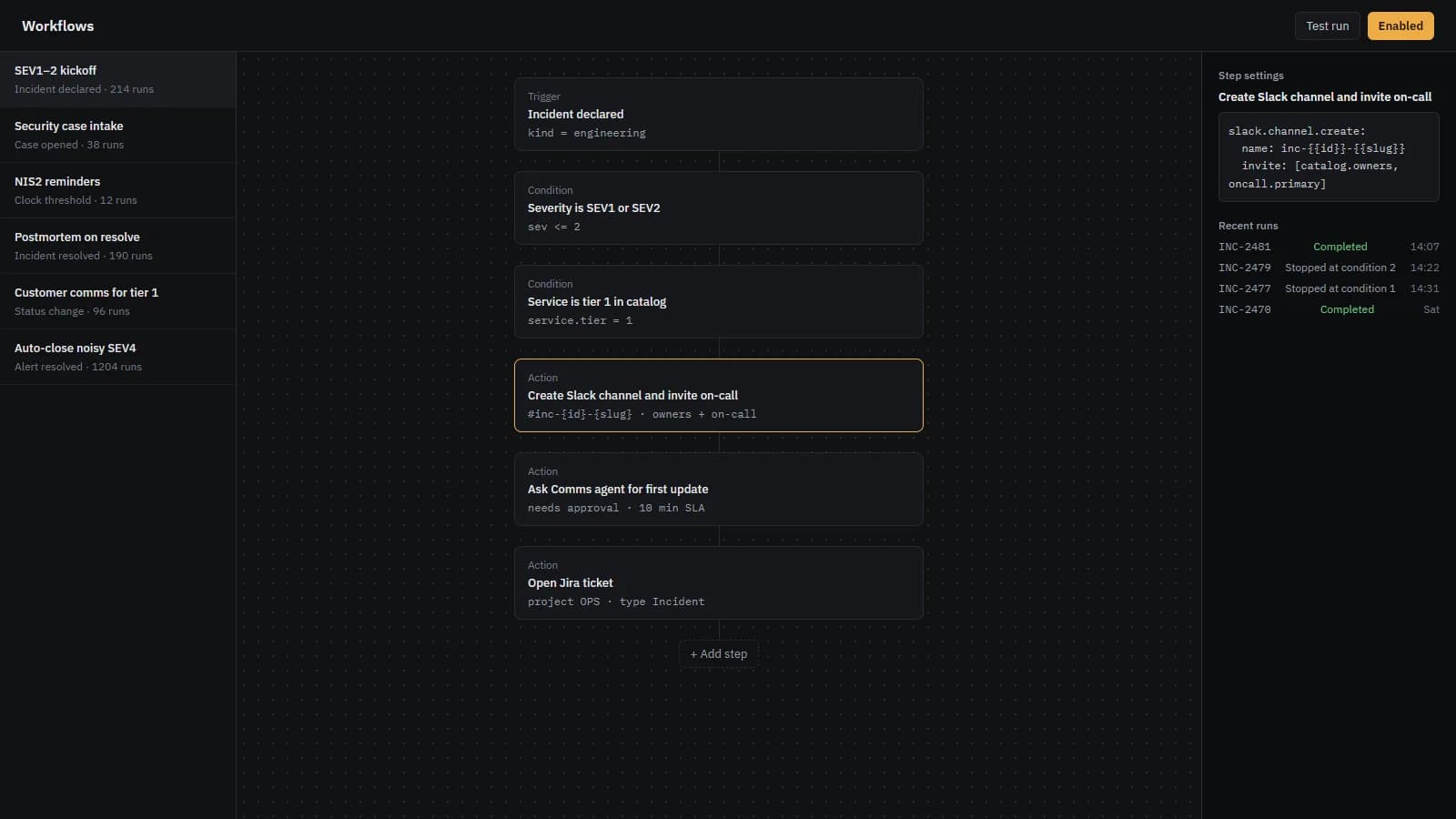
The process engine
Each step is a rule someone wrote. Nothing happens by hidden default, and a change is tested on a real incident before it goes live.
Products
Unified engineering and security incident response.
One process engine, engineering and security on one timeline, in the chat tools you already use.
Early access
Open ResolvoAn off-grid messenger for when the network is down.
Messages over a Bluetooth mesh, with optional local Wi-Fi, LoRa and a relay bridge. Limits stated plainly.
Submitted to Google Play, awaiting release
Open UnblockServices
A readiness assessment, process design and rollout in Resolvo, and an incident-response retainer with scope and response times agreed in the contract.
Questions
No. Resolvo works inside them. Each incident gets a room in the chat tool your team already uses, and the incident record stays in Resolvo so the timeline and the postmortem do not depend on chat history.
Yes. Each team defines its own stages, gates, rules and intake questions, starting from a ready-made process and dry-running a change before it goes live.
In the deployment you choose. Cloud deployments are hosted by BlueDefense at [PLACEHOLDER: hosting location and provider]. Self-hosted deployments run in your own infrastructure.
Pricing is being settled with the first design partners and is not published yet. The pricing section of the Resolvo page explains the model and what is included.
Yes. A readiness assessment maps the gap, process design and rollout put the process into Resolvo with you, and a retainer can cover the response itself.
Yes. The thresholds decide who the law applies to, not who needs a repeatable incident process. Smaller teams usually start with the assessment.
Next step
A walkthrough takes about half an hour. Early access is opened in small groups so each team is set up on the process it actually runs.